
Pre-Demolition Checklist
A successful demolition project is rarely defined by the moment the walls come down; rather, it is defined by the weeks of meticulous planning that occur beforehand. Whether a homeowner is clearing a lot for a new build in the Hill Country or a developer is preparing a site in Central Texas for commercial expansion, the preparation phase is the most critical component of the entire operation. In 2026, the complexity of environmental regulations and safety standards means that skipping even a single step in the pre-demolition phase can lead to costly delays or legal liabilities.
At Toss It Up Dumpsters, the focus is on providing the foundational support necessary for these transitions. From providing the right containers for debris to executing precise light demolition tasks, the goal is to move a project forward with speed and safety. This guide provides a comprehensive overview of the essential steps every property owner must take to ensure their site is ready for the heavy machinery.
Initial Assessment & Inspection | Evaluating the Scope
The first step in any demolition project is a thorough site assessment. This is where the property owner determines the specific requirements of the job. Is the goal a complete demolition, where every structure is removed down to the slab, or is it a more surgical light demolition project, such as removing a shed, a deck, or an interior wall?
During this phase, a professional inspector should be brought in to identify any hazardous materials. In older Central Texas homes, asbestos and lead-based paint are common concerns. Federal and state laws require these materials to be identified and professionally abated before any structural tearing begins. Furthermore, the structural integrity of the building must be evaluated. If a portion of the structure is being saved while another is removed, shoring may be required to prevent unintended collapses.
Permits & Legal Requirements | Central Texas Regulations
Operating within the legal framework is non-negotiable. Every municipality in the Hill Country, from Austin to Fredericksburg, has its own set of ordinances governing residential demolition. A property owner must secure the proper permits before any work commences. Failure to do so can result in hefty fines and an immediate "Stop Work" order from city inspectors.
The permit process typically requires:
- Site Plans | Detailed drawings showing the structures to be removed and their proximity to property lines.
- Environmental Clearances | Documentation proving that hazardous material inspections have been completed.
- Impact Fees | Payments made to the city to cover the potential wear and tear on local infrastructure.
Additionally, if the property is located within a historic district, further approvals may be necessary to ensure the complete demolition does not violate local preservation guidelines. It is always advisable to consult with a local demolition contractor who is familiar with the specific paperwork required by the county.
Utility Disconnection | Securing the Site
Before any heavy equipment arrives, the site must be "made safe" regarding utilities. This is one of the most dangerous phases of the project if handled incorrectly. A demolition crew must have absolute certainty that all live services have been terminated at the source.
The checklist for utility disconnection includes:
- Electricity | The local power company must pull the meter and disconnect the service line at the pole.
- Water and Sewer | Lines must be capped to prevent flooding or contamination of the local water system.
- Natural Gas | This is arguably the most critical step. Gas lines must be purged and capped by the utility provider.
- Telecommunications | Internet, phone, and cable lines should be removed to prevent them from being caught in machinery.
In Central Texas, "Call Before You Dig" (811) is a mandatory step even for light demolition projects that might involve disturbing the ground, such as removing a concrete patio or a fence line.
Safety Measures & Equipment | Protecting the Perimeter
Safety is the primary concern for any reputable demolition contractor. The site must be secured to protect both the workers and the public. In residential areas of the Hill Country, this often means erecting temporary fencing to keep curious neighbors and local wildlife away from the debris. Standard safety preparations include:
- Signage | "Danger" and "Keep Out" signs should be clearly posted around the entire perimeter.
- Personal Protective Equipment (PPE) | Anyone entering the site must be equipped with hard hats, high-visibility vests, steel-toed boots, and respiratory protection if dust is a factor.
- Fire Suppression | Even when utilities are cut, the risk of fire remains. Working fire extinguishers and water sources should be readily available.
First Aid Stations | A fully stocked medical kit must be easily accessible on-site.
For residential demolition, it is also important to notify neighbors of the project timeline. The noise and dust associated with the process can be disruptive, and clear communication helps maintain community goodwill.
Waste Management & Disposal | Organizing the Aftermath
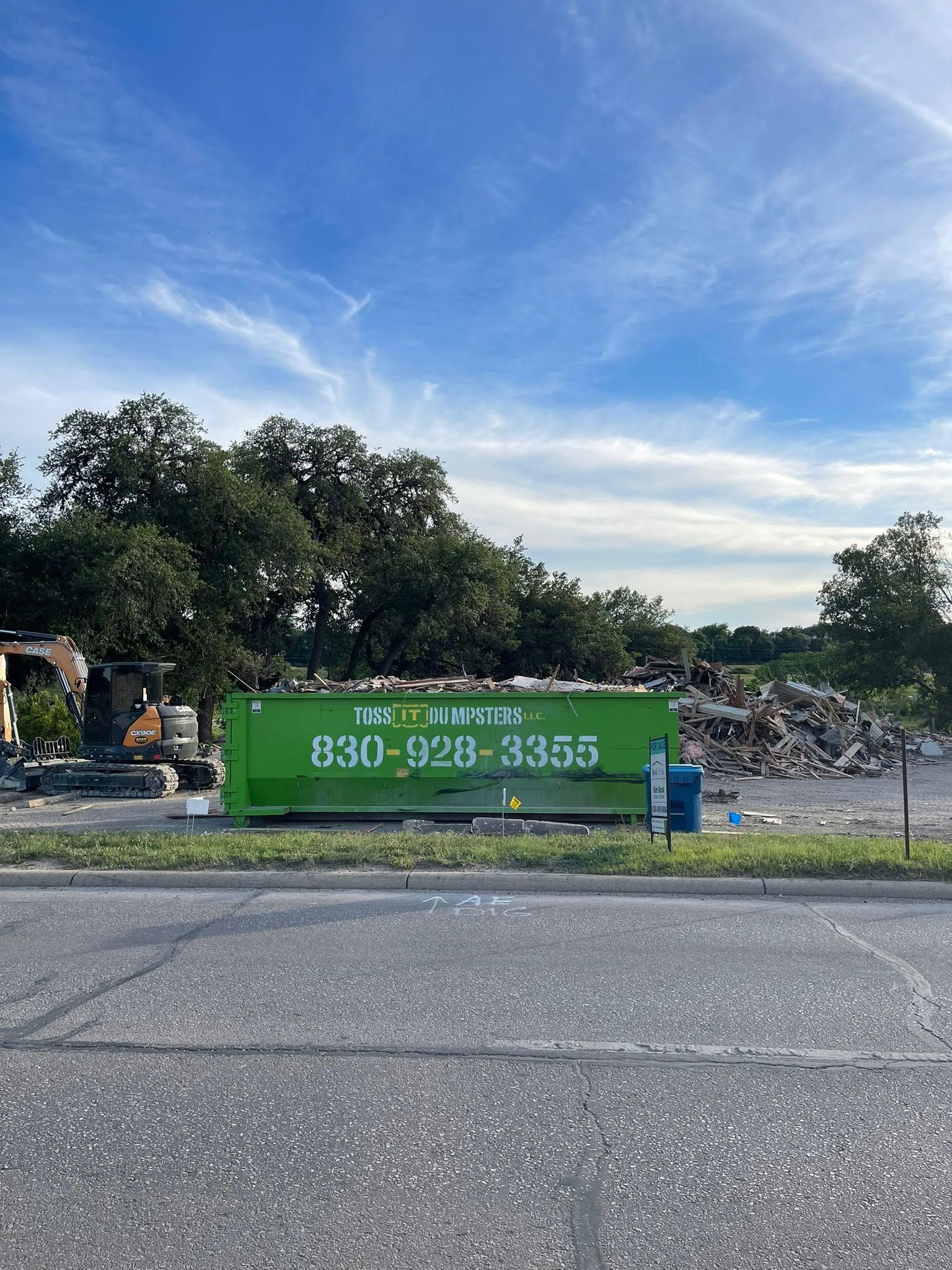
One of the most overlooked aspects of demolition is where the building goes after it is torn down. A complete demolition of a standard home can produce dozens of tons of debris. Managing this waste requires a strategic plan to avoid site congestion and environmental fines.
Central Texas has specific regulations regarding where certain materials can be disposed of. Landfills often have separate sections for "Construction and Demolition" (C&D) waste.
- Recycling | Whenever possible, materials like concrete, scrap metal, and untreated wood should be diverted to recycling centers.
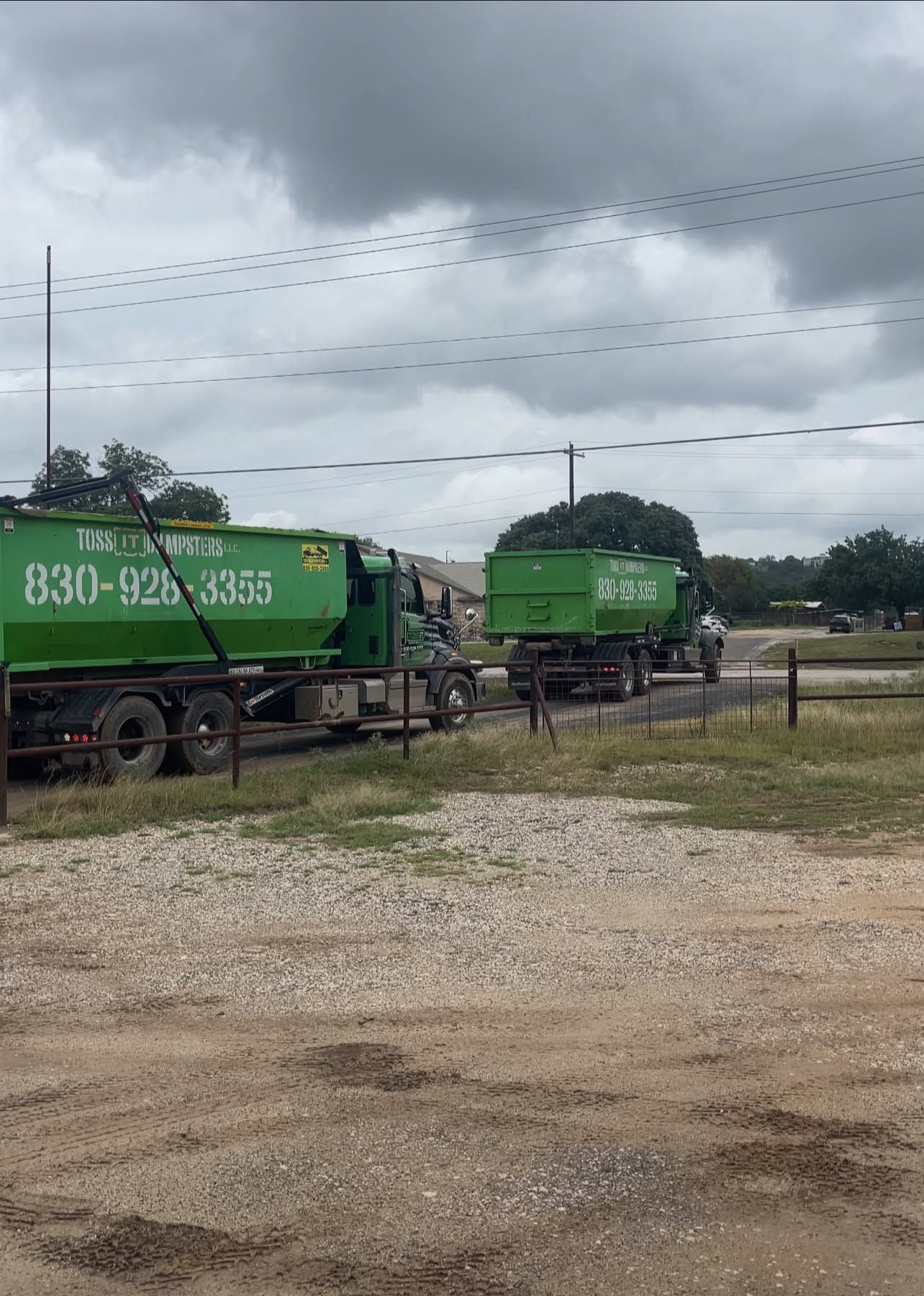
- Dumpster Placement | Large roll-off containers should be staged in an area that is accessible to the truck but does not interfere with the demolition machinery.
- Portable Toilets | A clean and accessible site requires proper sanitation for the crew.
At Toss It Up Dumpsters, the focus is on simplifying this part of the process. By providing various sizes of roll-off dumpsters and portable toilet rentals, the site remains organized, allowing the demolition to proceed without the hindrance of accumulating piles of trash.
Step-by-Step | Executing the Pre-Demolition Plan
To ensure no detail is missed, property owners should follow this chronological sequence:
- Conduct the Hazard Audit | Identify asbestos, lead, or mold.
- Define the Scope | Decide between a light demolition or a full site clearing.
- Hire the Professionals | Secure a demolition contractor and waste management partner.
- Apply for Permits | Submit the necessary paperwork to the local Central Texas municipality.
- Shut Off Utilities | Confirm with all providers that the site is cold.
- Install Barriers | Fence off the property and post safety signs.
- Stage the Waste Containers | Ensure dumpsters are on-site before the first wall falls.
The Role of Professional Light Demolition
While many people think of massive excavators when they hear the word demolition, many projects in the Hill Country are actually much smaller. Light demolition involves the removal of secondary structures or specific parts of a building. This might include:
- Removing an old shed or barn.
- Tearing down a detached garage.
- Pulling up a swimming pool deck.
- Gutting a kitchen or bathroom for a remodel.
These projects require a higher level of precision to avoid damaging the surrounding landscape or the main structure. A professional team ensures that these smaller-scale removals are handled with the same level of care and regulatory compliance as a full-scale commercial project.
Consult The Demolition Experts at Toss It
The difference between a stressful project and a smooth one lies entirely in the preparation. By following a thorough pre-demolition checklist, property owners in Central Texas can protect their investment, their safety, and the local environment. Whether the project involves a complete demolition of a legacy estate or a light demolition of a backyard structure, the principles of assessment, legal compliance, and waste management remain the same.
In 2026, the demand for efficiency in the construction industry is higher than ever. Proper planning ensures that once the demolition starts, it can proceed without interruption, clearing the way for the exciting phase of rebuilding and growth that follows.
Find A Demolition Contractor Near You | Partner with Toss It Up Dumpsters
When it is time to turn the plan into action, having a reliable partner is essential. Toss It Up Dumpsters is proud to serve the Hill Country and the surrounding Central Texas area with professional light demolition services and comprehensive waste management solutions. The team understands the local landscape and the specific requirements of the region.
From providing the portable toilets your crew needs to delivering the dumpsters that keep your site clean, the goal is to make the process as seamless as possible. Do not leave the success of your project to chance.
Contact Toss It Up Dumpsters today to discuss your next demolition project and discover how a professional demolition contractor can handle the details, so you don't have to.