How to Prepare for a Demo: Sheds, Barns, Homes
As developers, builders, and construction managers, we live in the business of transformation. We see a dated structure on a promising lot in Kerrville, or an old, non-functional building on a prime piece of land in Bertram, and we don't just see what is — we see what could be.
That blank slate is the start of every great project. But getting to that blank slate isn't as simple as swinging a wrecking ball. A successful demolition is a carefully orchestrated process, a craft of unbuilding.
We’ve been on enough job sites to see the difference between a smooth, efficient takedown and a project-derailing nightmare. The nightmare project is the one where angry neighbors are calling the city, an unexpected asbestos discovery shuts down the site for weeks, or a "missed" utility line causes a catastrophic flood. The successful project, however, is a model of efficiency. It's clean, safe, on-schedule, and leaves the site perfectly prepped for the foundation work to begin.
This guide is our blueprint for achieving that successful, professional demolition. It’s not just about compliance; it’s about risk management, community relations, and setting your entire build up for success. We'll walk through the non-negotiable preparations, from managing neighborhood relations to navigating the complex web of permits and hazard abatement. This is how we, as professionals, prepare for a demolition project.
Talking to Your Neighbors Before a Demolition
In the world of development, our reputation is everything. The first step in any demolition, long before the heavy equipment rolls in, is proactive communication. For many builders, this step feels like a "soft" skill, but in our experience, it's one of the most critical risk management strategies you can employ. Ignoring the neighbors is the fastest way to get unwanted attention from code enforcement and local officials.
Think about it from their perspective. A demolition is loud, dusty, and disruptive. It’s heavy trucks on their street at 7 AM. It’s the vibration from an excavator rattling their windows. If they aren't prepared, their first reaction is to complain to the one person who can stop you: the city inspector. And you don’t want that.
Here is a step-by-step process for professional community relations:
- Identify Stakeholders: This isn't just the two adjacent houses. This includes the business across the street, the property owners behind you, and maybe even the local school if your truck route passes by during drop-off.
- Time It Right: Give them at least one week's notice. A personal visit or a simple, professional flyer dropped at their door works wonders.
- Communicate Clearly: Don't be vague. Tell them:
- Who You Are: "We are [Your Company Name], a professional builder in this community."
- What You're Doing: "We will be performing a controlled residential demolition of the structure at 123 Main Street to prepare for a new project."
- When It Will Happen: Give them a clear start date and your expected hours of operation (e.g., "Monday-Friday, 7:30 AM to 5:00 PM").
- What to Expect: Be honest. "You can anticipate periods of noise from heavy machinery. We will have professional dust control measures, like water spraying, in place to minimize the impact on your property."
- Who to Contact: Provide a direct phone number for your site supervisor or project manager. Giving them a direct line to a problem-solver (you) stops them from calling the city (the problem-creator).
This simple act of communication frames you as a professional, conscientious partner in the community. It builds invaluable goodwill and can turn a potential adversary into an understanding neighbor, which is priceless when the work actually begins.
Navigating the Red Tape | Acquiring Permits for Your Residential Demolition
If community relations is the "soft" first step, this is the hard-and-fast legal barrier. You cannot, under any circumstances, begin demolition without the correct permits in hand. Attempting to "fly under the radar" is the single most expensive gamble a developer can make. It leads to stop-work orders, massive fines, and a permanent black mark on your record with the local building department.
Permitting is not a single checkbox; it's a process of coordinating with multiple agencies. For any given residential demolition project, you will likely need a combination of the following:
- The Demolition Permit: This is the primary permit from the city (like Kerrville or Bertram) or county.
- Utility Disconnection Permits: Most municipalities will not issue a demo permit until you provide written proof that all utilities have been safely disconnected by the providers.
- Hazardous Material Abatement Permits: If your pre-demo survey finds asbestos or lead, you will need separate permits from the Texas Department of State Health Services (DSHS) or other relevant bodies before abatement can even begin.
- Right-of-Way or Street Closure Permits: If your equipment or a necessary dumpster will block a sidewalk or a lane of traffic, you need a permit for that.
Let's use our local areas as an example. In Kerrville, the Building and Planning Department manages demolition permits. They will not issue one until you've submitted a complete application, which includes a site plan, fees, and, most importantly, confirmation of utility disconnects and a mandatory asbestos survey for most structures. This isn't an overnight process. It can take weeks to get all the prerequisite approvals.
In Bertram, the process is similar, requiring coordination with city officials and potentially Burnet County for larger tracts. These departments are there to protect the community and its infrastructure, and they take their job seriously.
This process is where professional demolition contractors first prove their worth. An experienced contractor knows the local permitting process inside and out. They know what the clerks in the Kerrville office look for and what the specific requirements are in Burnet County. They handle this paperwork, so you can focus on lining up the trades for the next phase of your build.
Site Safety Protocols | Utilities, Hazardous Materials and Complete Demolition Prep
With the community notified and permits pending, the next phase is making the site physically safe for demolition. This phase is divided into two critical, non-negotiable parts: utility disconnection and hazardous material abatement.
Part 1 — Turning Off Utilities
This is the most dangerous part of the job. A machine hitting a live gas or electric line is a catastrophic event that can lead to severe injury, death, and multi-million dollar damages. A "close call" is not acceptable.
You must schedule a formal disconnection with every utility provider. This does not mean flipping the main breaker or turning the valve at the curb.
- Electricity: The utility provider (e.g., Pedernales Electric Cooperative) must come out and physically disconnect the service from the pole or transformer. The line must be dead.
- Gas: This is the most critical. The gas company must shut off the service and, in most cases, physically cap the line at the property border. You need written certification from them that this is complete.
- Water: The city or water utility must shut off the service at the main. An open water line can flood your site in minutes, compromise the soil, and cause a massive mud problem that halts all work.
- Sewer: The sewer line must be capped. This prevents demolition debris from entering the municipal sewer system, which can cause blockages and lead to significant fines and repair costs.
We insist on getting a "will-serve" letter or a formal certificate of disconnection from every single one of these providers. Do not take a "yeah, we're scheduled" as confirmation. Get it in writing before a single piece of heavy equipment touches the property.
Part 2 — Removing Hazardous Materials
Before the complete demolition begins, the structure must be surveyed for hazardous materials. This is a legal requirement. The two most common culprits are asbestos and lead.
Asbestos
Found in structures built before the 1980s, asbestos is a silent killer. It was used in everything: "popcorn" ceilings, vinyl floor tiles, attic insulation, pipe wrap, and exterior siding. If these materials are disturbed—broken, crushed, or pulverized by demolition—the microscopic fibers become airborne. Once inhaled, they can cause fatal diseases like mesothelioma and asbestosis decades later.
You must hire a licensed asbestos inspector. If it's found, it must be removed by a licensed abatement contractor following strict containment and disposal protocols. You cannot simply knock down a building containing asbestos. The legal and financial liability for improper abatement is staggering.
Lead-Based Paint
Common in any home built before 1978. Demolition can create vast amounts of lead dust, contaminating the soil on your site and neighboring properties. This requires "lead-safe" work practices as defined by the EPA.
Other hazards, like old oil heating tanks, mercury-containing thermostats, and PCB-filled fluorescent light ballasts, must also be identified and removed by specialists. A professional demolition contractor will coordinate these surveys and the subsequent abatement as part of their pre-demo process.
The Smartest Investment | Why Hiring Professional Demolition Contractors is Non-Negotiable
As a builder or developer, we are constantly running a cost-benefit analysis. It can be tempting to think, "I'll save a few thousand dollars and have my framing crew or some general laborers handle the demo."
This is, almost without exception, a costly mistake.
Hiring professional demolition contractors is not a cost; it's an investment in safety, efficiency, and liability protection. Here’s why it is non-negotiable:
1. Liability and Insurance
This is the single most important reason. Your General Liability policy likely has exclusions for high-risk activities like demolition. If your general crew makes a mistake—say, a wall falls the wrong way and crushes a neighbor's fence or, worse, a vehicle—your insurance may refuse the claim. You are now personally on the hook.
Professional demolition contractors carry specialized insurance policies that cover the unique risks of this work. When you hire them, you are transferring that massive liability from your company to theirs.
2. Expertise and Equipment
Demolition is a science. A pro crew understands structural loads. They know how to "trip" a building to make it fall in on itself, protecting adjacent structures. They have the right equipment—an excavator with a grapple or shear attachment, not just a rented skid steer. This expertise means the job is done faster and, more importantly, with predictable safety. They can perform a delicate partial demolition, saving a historic facade, or a systematic complete demolition of an entire structure with surgical precision.
3. Efficiency and Waste Management
This is where time and money are truly saved. Pros are masters of waste-stream sorting. As they demolish, they are actively separating materials:
- Concrete and masonry go into one pile for crushing and recycling.
- Wood goes into another.
- Metals (rebar, pipes, wiring) are separated for scrap.
Why does this matter? Sorted C&D (Construction and Demolition) debris is significantly cheaper to dispose of at landfills and recycling centers than mixed-load "general trash."
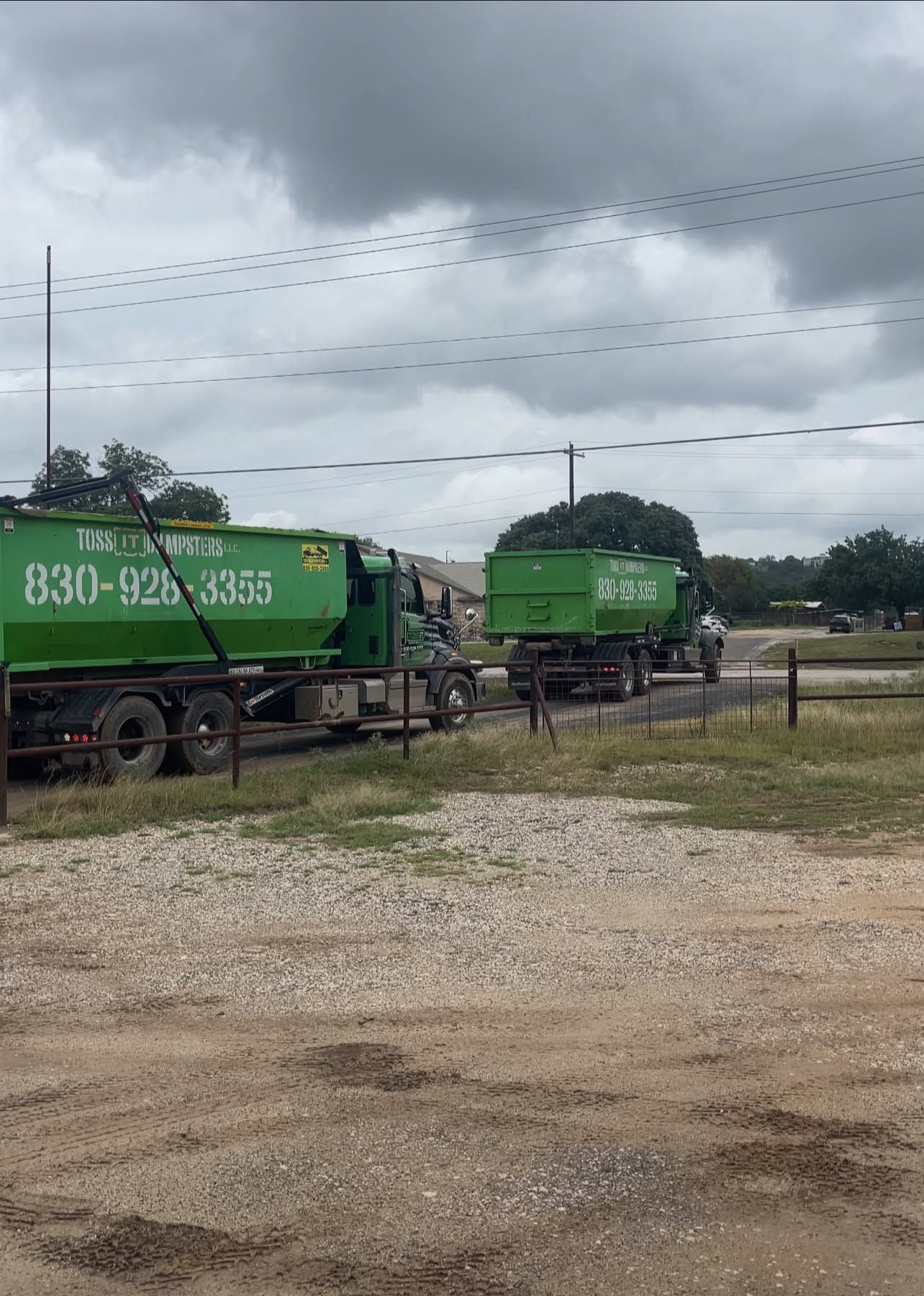
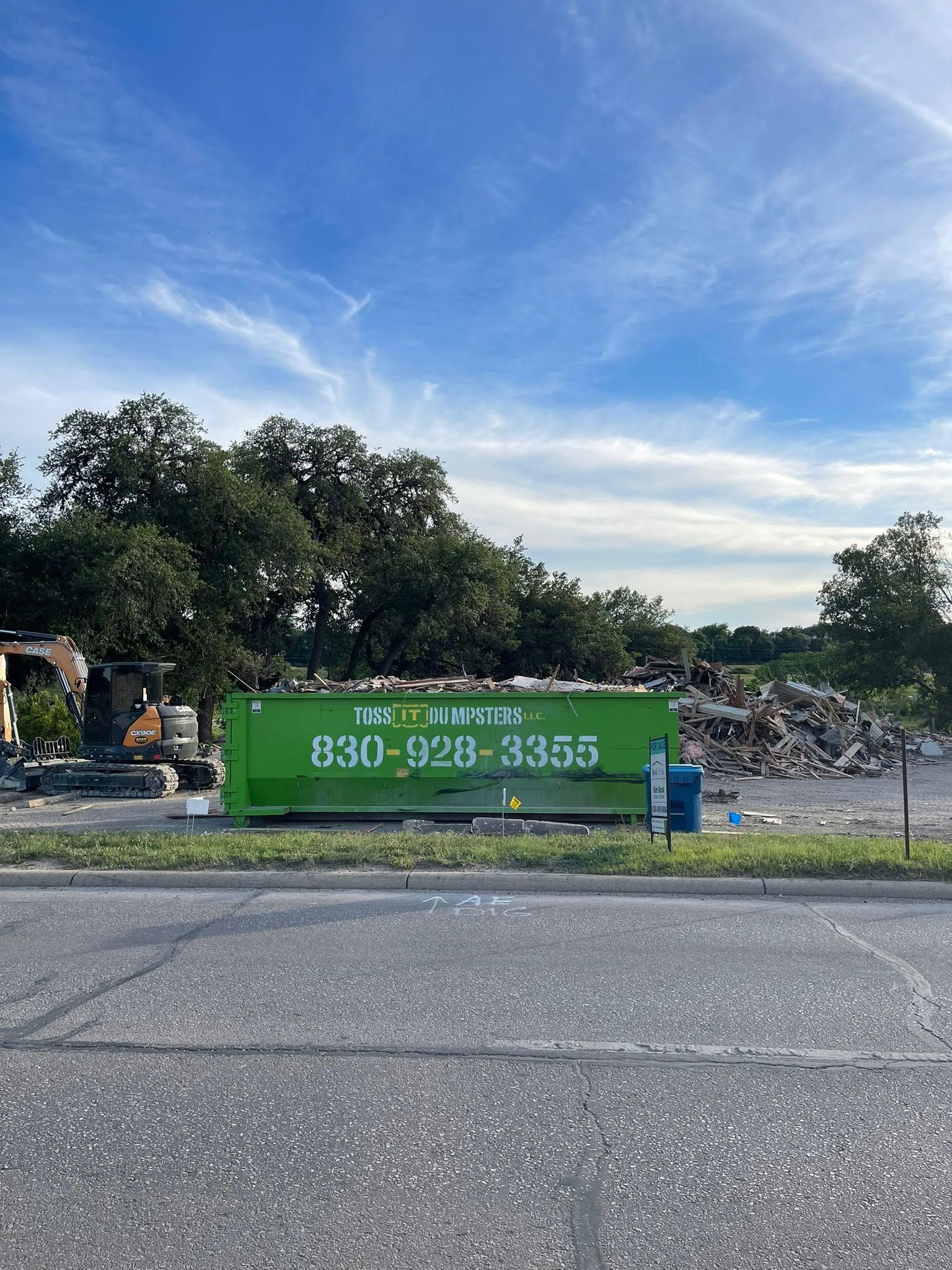
Furthermore, they have relationships with dumpster providers (like us at Toss It Up Dumpsters). They know exactly what they need: a 30-yard roll-off for C&D, swapped out daily, and a 20-yarder for trees and brush. This seamless coordination means your site is never stalled, waiting for a full dumpster to be hauled.
4. They Handle the Entire Process
A true professional contractor handles the A-to-Z. They pull the permits, they schedule the utility disconnects, they coordinate the hazmat surveys, and they manage the abatement. Your time, as the developer, is far more valuable lining up the foundation, plumbing, and framing subcontractors for the new build, not standing in line at the permitting office.
Beyond the Takedown | Understanding Complete Demolition Services
It's important to understand what you're paying for. When you engage a firm for complete demolition services, you are buying a turn-key solution that goes far beyond just knocking the building down.
This full-service package typically includes:
- Phase 1: Pre-Demolition: All permitting, utility coordination, and hazardous material surveys/abatement.
- Phase 2: The Demolition: The physical teardown of the structure. This can be mechanical (with excavators) or, in some cases, "deconstruction," where materials like valuable longleaf pine beams or antique bricks are salvaged for resale or tax credits.
- Phase 3: Site Clearing: Hauling away 100% of the debris. This is a crucial distinction. An amateur may knock it down and leave you with a 20-ton pile of rubble to deal with.
- Phase 4: Foundation & Slab Removal: Complete demolition services almost always include breaking up and removing the old concrete foundation, footings, and slabs.
- Phase 5: Final Grading: The final step. They backfill any holes (like a former basement) with clean, compacted soil and grade the entire lot. They leave you with a clean, level, construction-ready pad.
When you get a bid, you must confirm it includes all five phases. Anything less is not a "complete" service.
Choosing Your Partner in Kerrville & Bertram | Vetting Residential Demolition Contractors
Now that we understand the process, how do you, as a builder in Kerrville or a developer in Bertram, choose the right partner? All residential demolition contractors are not created equal.
Here is your vetting checklist:
- Ask for their Certificate of Insurance (COI): Do not skip this. Call the insurance agent listed on the COI to verify the policy is active and has specific coverage for demolition operations.
- Check their Safety Record: Ask for their EMR (Experience Modification Rate). This is a number used by insurance companies to gauge a company's safety history. An EMR below 1.0 is excellent.
- Request Local References: Don't just ask for references; ask for references from other builders in your area. Have they worked in Kerr County? Do they know the landfill and recycling rules at the Burnet County transfer station?
- Get a Detailed Scope of Work: The lowest bid is often the most expensive. A cheap "knock and drop" bid that doesn't include permit fees, hazardous material abatement, or final grading will cost you a fortune in change orders. Your bid must be a detailed, line-item scope that matches the "Complete Demolition Services" we outlined above.
- Review their Waste Management Plan: Ask them, "Where does the debris go?" A professional contractor will have a clear plan for recycling concrete, metal, and wood. This is not only environmentally responsible but also speaks to their professionalism and often reduces tipping fees.
Choosing the right partner from the many residential demolition contractors available is the final and most important decision you'll make in this phase.
Laying the Groundwork for Success with Toss It!
A demolition project is the first chapter in your new build's story. How you execute it sets the tone for everything that follows.
As we've explored, a successful residential demolition is a disciplined process. It begins with professional courtesy to the community. It moves through the non-negotiable legal and safety requirements of permitting, utility disconnection, and hazardous material abatement. And it concludes with selecting a qualified, insured, and professional partner from the many demolition contractors available.
By treating the "unbuilding" with the same seriousness and professionalism as the "building," you manage your risk, protect your reputation, and create the perfect, clean slate for your new project. We, as your partners in the industry, are here to support that process every step of the way, keeping your site clean and your project on track.
Ready to clear the way for your next project in Kerrville, Bertram, or the surrounding Hill Country? While you line up your residential demolition contractors, let us handle the critical site logistics. Toss It Dumpsters provides the reliable dumpster rentals, C&D recycling solutions, and portable toilet services that top developers and demolition contractors rely on to keep their projects moving.
Call us today to get your site services scheduled and create the foundation for a successful build.